


Good Morning and welcome back!
This week we are kicking off a new series, it’s a look behind the scenes with a marketing leader in their day to day work life. I invited long time industry peer Matthew Barker, who is Head of Marketing & Communications at Portsmouth FC to let us look behind the curtain at Pompey.
Matthew shares some incredible insights and dives deep in the emotional and tribal nature of professional football.
A Day In The Life At Running Marketing At Portsmouth FC ⚽️
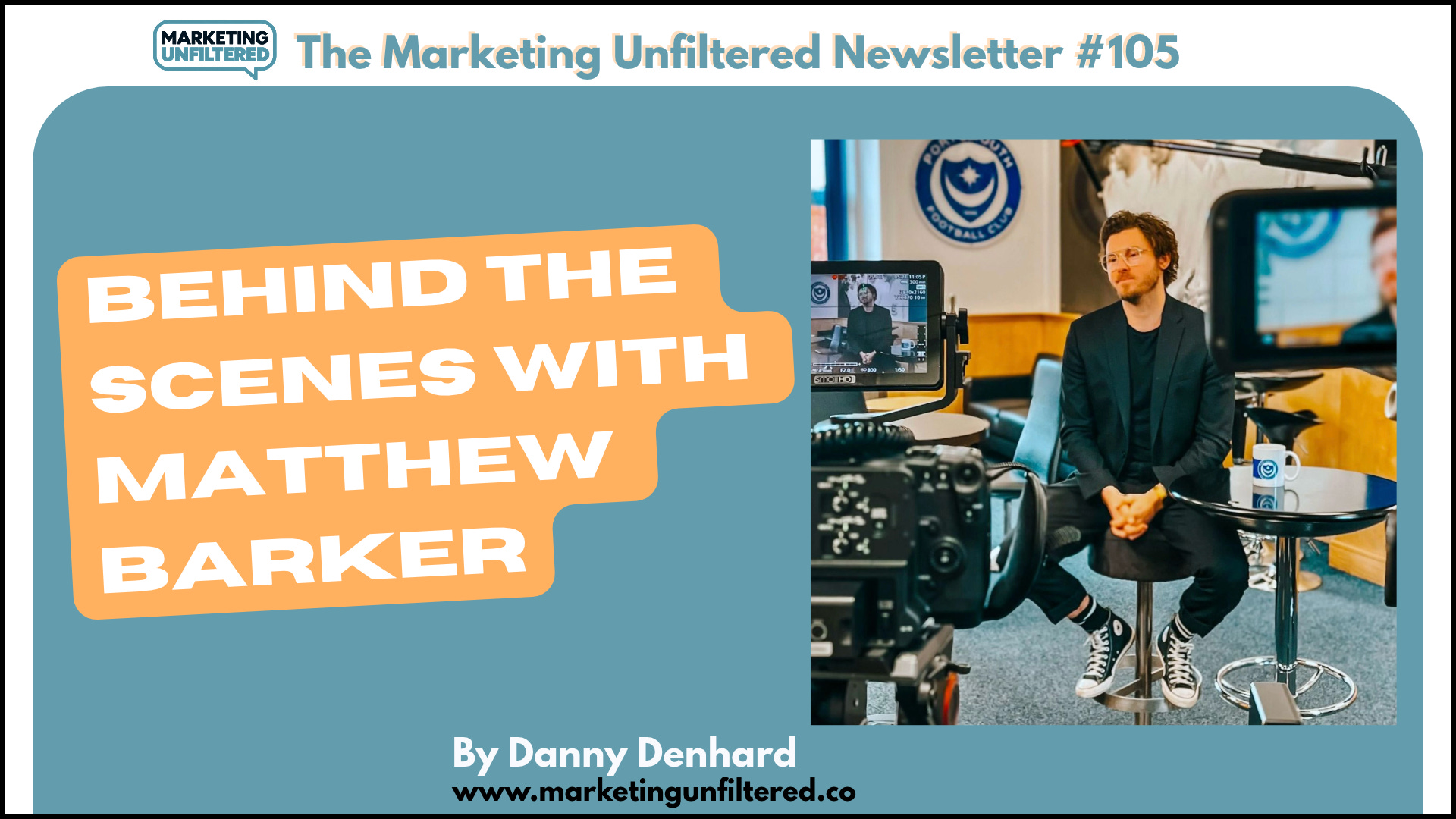
By Danny Denhard - Coaching marketing & growth leaders, consulting with marketplaces and challenger brands and advising business & marketing leaders. Interviewing Matthew Barker Head Of Marketing & Communications at Pompey
Subscribe Today To Receive Marketing Unfiltered Weekly
Q/ What does your average day look like?
There probably isn’t an average day, which is one of the things I enjoy about working in football.
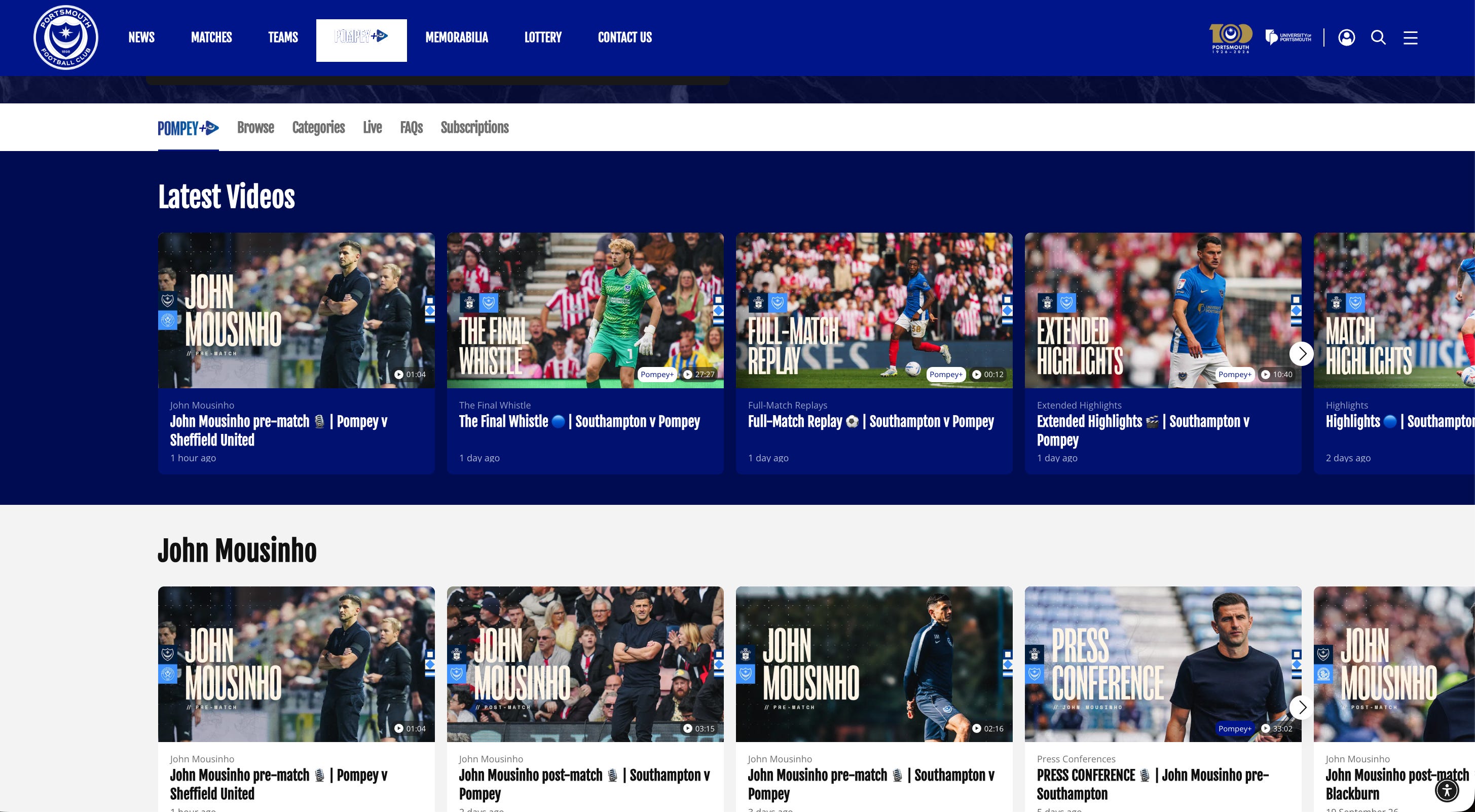
My role covers marketing, communications and digital, so on any given day I could be working on matchday planning, reviewing our content and social output, looking at ticket or retail campaigns or developing our streaming x VOD product called Pompey+.
A lot of my time is also spent managing and understanding priorities. Football creates a constant stream of things that feel urgent, so an important part of the job is making sure the team knows what actually matters and that we don’t lose sight of longer-term objectives because of what has happened that day.
Q/ What 2-3 things do you wish outsiders knew about marketing and marketing management in professional football?
Firstly, football clubs produce a huge amount of content and communications. You are effectively operating as a publisher, broadcaster, retailer, ticketing business, entertainment business and community organisation at the same time.
Secondly, you have much less control over your product than most marketers. The biggest influence on how supporters feel about the club is what happens on the pitch, and marketing has no control over the result.
Finally, supporters have an emotional and often lifelong relationship with the club you are marketing. That is incredibly powerful, but it also means you have a responsibility to understand the history and culture of the club. You cannot treat supporters simply as customers.

Hit Share ↘️ if you enjoyed this interview or learnt something your team would appreciate
Or copy & paste marketingunfiltered.co/p/105 into your Teams or Slack chat
Q/ How different is your approach for matchday marketing compared with what you do the rest of the week?
Matchday is much more operational and reactive.
During the week, we can plan campaigns, analyse performance, develop content and work on longer-term projects.
On matchday, the priority shifts towards delivering the live experience and telling the story of the game.
We are producing content before, during and after the match across social, the website and Pompey+, alongside stadium screens, matchday communications and our live matchday show.
The planning happens beforehand so that when the unpredictable things happen, the team has the capacity to respond.
Q/ On match day so much happens, from team news, scores, red cards, interviews and sometimes unfortunately sackings, how do you and the team manage match days and all the events that happen?
Preparation and clear responsibilities are really important.
There are predictable moments in every matchday, so those should be planned properly. Team news, kick-off, half-time, full-time, interviews and highlights all have established workflows and owners.
That gives you more space to deal with the unpredictable moments.
The other important thing is judgement. Being first is not always the most important thing. If something significant or sensitive happens, we need to understand the facts, speak to the right people internally and communicate accurately.
Q/ How do you decide which stories to tell about the club, players, and fans, and which stories not to tell?
We look at whether something is interesting or useful to supporters and whether it helps people understand the club, the team or the people within it.
The best stories usually have some form of access, personality or genuine connection to the club. We want supporters to see things they would not otherwise see.
We use our VOD platform Pompey+ to help us achieve this
But not everything needs to become content. Players and staff need space to do their jobs, and there are times when privacy or sporting considerations are more important than generating engagement.
Knowing when not to publish something is part of good communications.
Q/ What are the biggest challenges and advantages of involving players and coaching staff in marketing campaigns?
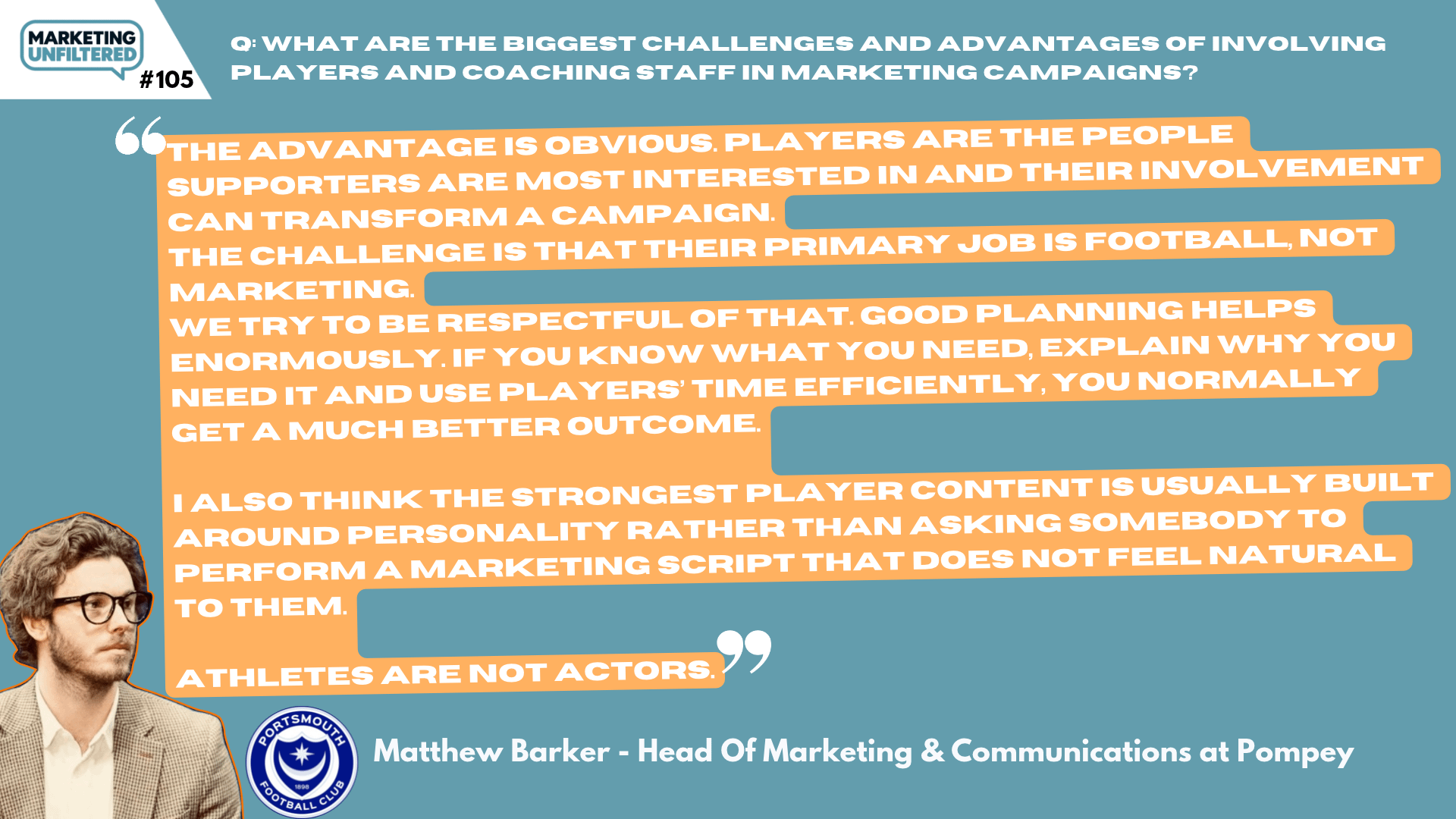
The advantage is obvious. Players are the people supporters are most interested in and their involvement can transform a campaign.
The challenge is that their primary job is football, not marketing.
We try to be respectful of that. Good planning helps enormously. If you know what you need, explain why you need it and use players’ time efficiently, you normally get a much better outcome.
I also think the strongest player content is usually built around personality rather than asking somebody to perform a marketing script that does not feel natural to them.
Athletes are not actors.
Q/ You have so many marketing channels to use and put out the most important messages, which channel(s) get the best results for you currently?
It depends entirely on the objective.
Social gives us enormous reach and immediacy, particularly around football and major club moments. Email and CRM are often stronger when we need supporters to take a specific action, such as buying a ticket or product.
Our website and app remain important because they are owned channels, while Pompey+ is becoming increasingly important for deeper engagement through live and on-demand video and audio.
The mistake is thinking every message needs to go everywhere.
We try to start with the audience and the objective and then decide which channel is best suited to it.
Q/ What is one recent experiment or new channel you tried that worked, and one that did not, and what did you learn from each?
Pompey+ has been one of our biggest areas of experimentation. We moved away from iFollow and created our own streaming and content platform, which has given us much more control over the product, content and relationship with supporters.
We are still learning what makes people subscribe and, importantly, what makes them stay subscribed. Live matches are naturally a major driver, but the challenge is creating enough value outside those moments.
Q/ Professional football isn’t a traditional business, goals and KPIs will be accelerated, what are some unique goals that others don’t expect?
Some of our measures would look familiar to any marketing team: revenue, reach, engagement, conversion, database growth and digital subscriptions.
Others are much more specific to football.
We might be trying to increase attendance at a Pompey Women fixture, improve the experience for somebody attending Fratton Park for the first time, grow an international audience, deliver a live broadcast or make sure a commercial partner receives the exposure and activation agreed with the club.
There are also objectives that are harder to put into a dashboard.
Maintaining trust with supporters is one of them. You can achieve a short-term commercial result and still damage the relationship if you approach it in the wrong way.
Q/ If a big transfer happens, what’s the process the team goes through to put out the message?
Most of the work happens before the announcement.
Once we know a transfer is progressing, the relevant people start preparing photography, video, interviews, graphics, website content and social assets.
But football transfers can change very quickly, so everything remains confidential and nothing can be assumed until the appropriate approvals are in place.

Q/ How do you balance sponsor demands and revenue goals with keeping your club’s brand and fan culture authentic?
The best partnerships make sense to supporters and create value for both the partner and the club.
Our commercial partners are important because their investment supports the football club, but supporters can recognise forced content very quickly.
We work closely with our commercial team and partners to find ideas that fit naturally within our channels and audience.
Q/ How does your marketing plan change when the team is losing, or when there is controversy on or off the pitch?
You have to read the room.
You cannot schedule emotion in football.
A campaign that made complete sense on Friday might feel completely inappropriate after a difficult result on Saturday.
That does not mean abandoning your marketing plan every time the team loses, but tone and timing matter.
Q/ What’s the most rewarding part of your job?
Seeing something the team has worked on connect with supporters.
That could be a major campaign like a kit launch, but equally it can be a story about a supporter, a community initiative or something that captures what Portsmouth Football Club means to people.
Football clubs have a rare position within their communities. You see generations of the same family coming to Fratton Park and people organising significant parts of their lives around the club.
Being able to influence how that relationship is communicated and experienced is probably the most rewarding part of the role.
The Key Takeaways for Marketers
Prioritise Long-Term Goals It is crucial to manage daily urgencies without losing sight of broader, long-term objectives.
Understand Your Audience Supporters have an emotional, often lifelong relationship with the brand. They should not be treated simply as customers - they are more.
Prepare for the Unpredictable Having established workflows for predictable moments frees up capacity to handle sensitive or unexpected events effectively.
Be Selective with Channels Avoid the mistake of thinking every message needs to go everywhere. Start with the audience and objective, then choose the best-suited channel.
Read the Room Tone and timing matter immensely. Marketing plans must be adaptable, especially when external events shift the audience’s mood (especially in pro football up to 3 matches per week).
If you’ve missed any recent articles, here are Harry and I’s picks
The C-Suite Job Scams: How Cybercriminals Are Preying On Executives
Separate Bedrooms, Shared Scorecard: Marriage Guidance For Marketing And Sales.
Some Inspiration For You & Your Team
Thanks for reading today, if you enjoyed this new series drop me a line at mu@dannydenhard.com or hit the ❤️ on this email.
Go & have a great weekend.
Danny Denhard & Harry Lang
Excellent read - I love to hear what happens behind the scenes and how marketing works in different orgs.