


Good Morning!
I officially call it, this week was Christmas ad week. For the record, I wasn’t a fan of the John Lewis ad 😧… If you haven’t already enjoy the full ads with some analysis below

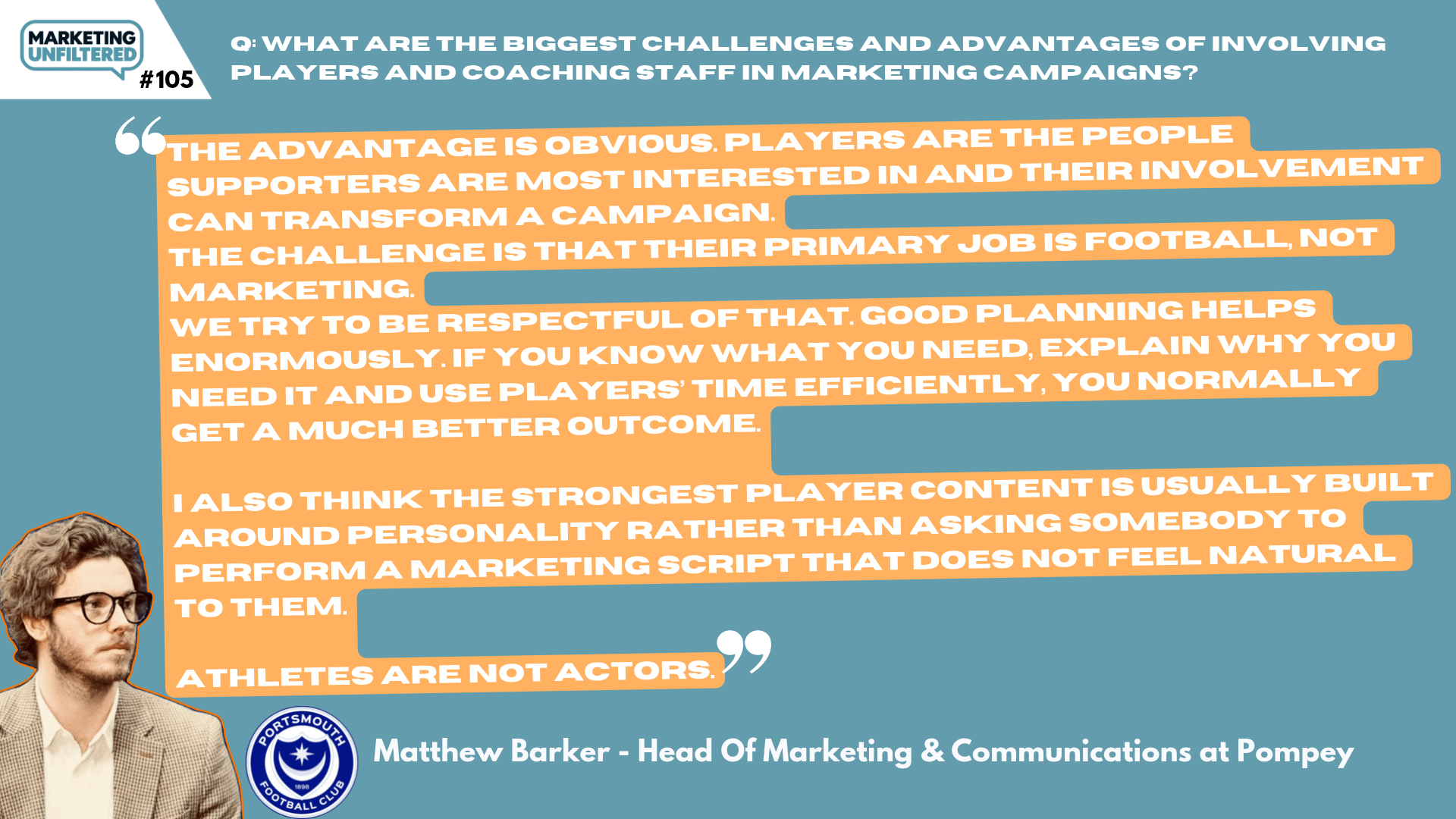
Thank you! I’m over the moon the behind the scenes series kick off with Matthew from Portsmouth FC went down so well, thank you for your feedback!
Moving forward, it’s a series we are going to bring you regularly.
This Week: There’s a version of burnout you won’t see on wellness posters and HR emails. There’s wasn’t a dramatic collapse, no continuous 90-hour work weeks, it was another marketer who seemed to be flying and suddenly couldn’t write a simple email. In this week’s newsletter, Alan Derbyshire-Trice shares how years of becoming “the right kind of leader” slowly disconnected him from himself, why the real cost never shows up on a dashboard, and the quiet questions that can tell you if it’s time to lead with less mask and more truth.
It Wasn’t the Hours...
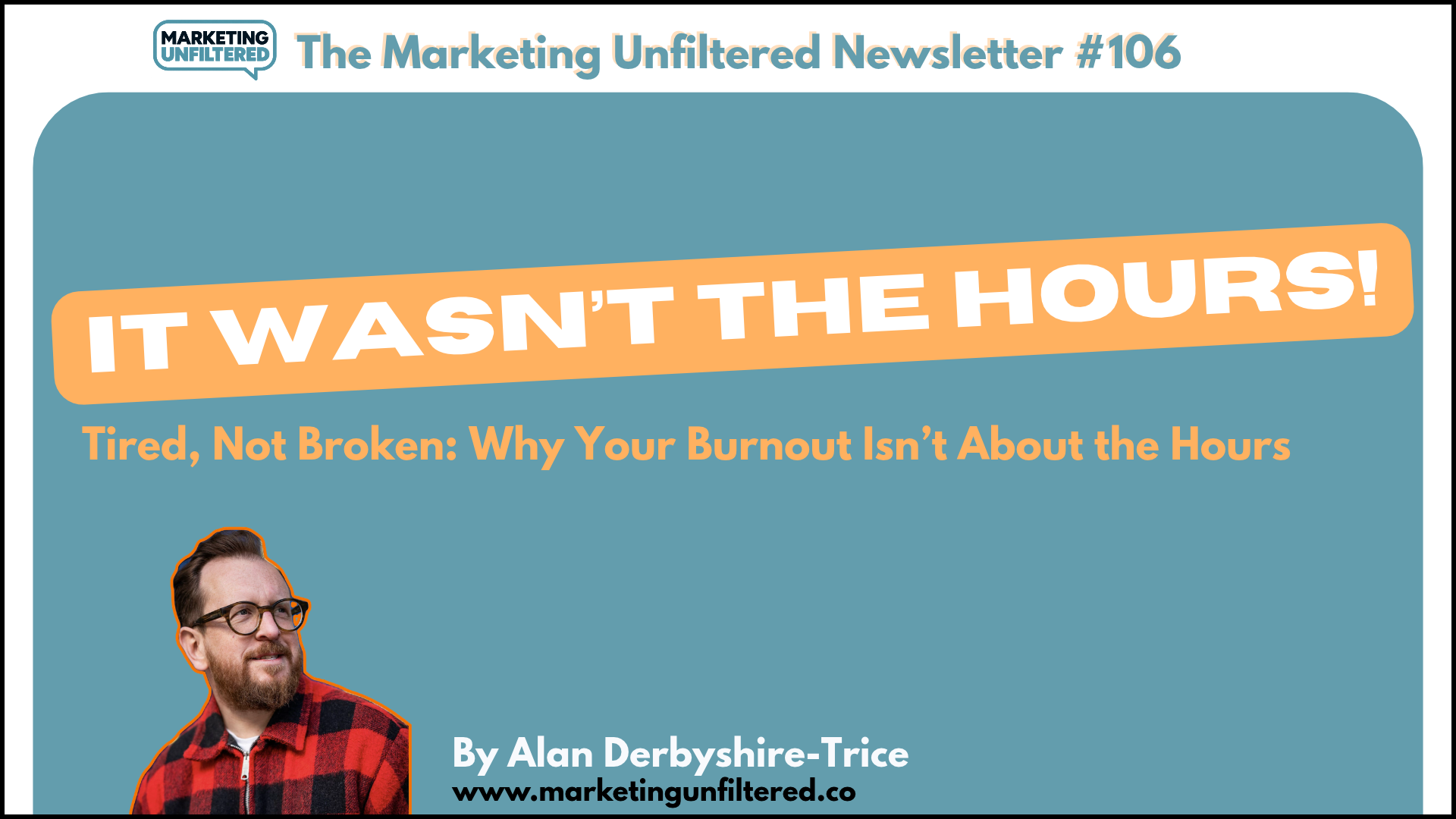
Alan Derbyshire-Trice - helps successful leaders lower the mask and find a more sustainable way to lead, work and live - Connect On LinkedIn & Sign Up To His Newsletter
In 2015, I was working in fashion marketing in London, and I couldn’t write an email.
Not a difficult one. An ordinary, everyday email, the sort I’d written thousands of times. I’d sit there and the words wouldn’t come out right, and the thing my whole career had been built on, a quiet certainty that I knew what I was talking about, had gone.
I didn’t tell anyone. I’d said yes to far too much and promised a lot of people a lot of things, and at some point, it had become more than I could deliver. It was like watching a car crash in slow motion over many weeks, except I was the one driving. I was getting what I’d now happily call panic attacks. At the time I’d have told you I was a bit stressed.
And in every meeting, in front of every boss, I held it together.
That’s the bit that still gets me. Nobody had any reason to worry. Everything that version of me was doing was being rewarded, so I had no reason to question it either. It’s very hard to stop doing something that everyone, including you, is telling you is working.
Then one day my boss pulled me into her office for something small. She said something and I heard myself say, “Could you just repeat that?” She did, and I still couldn’t take it in. All I could manage was, “Can you just bear with me for a minute?”
I walked out into the square outside the office, and this wash of panic came over me. I remember thinking, very clearly, I can’t do this anymore. And underneath it, a thought I’d never had in my career before. I don’t know what I’ve done.
Here’s why I’m telling you this. Almost everything written about burnout says the same thing. You’re working too hard, so work less. Take the holiday. Switch off the phone. I’m not going to tell you that’s wrong, because sometimes it isn’t. But it isn’t what happened to me, and I’d bet a fair few senior marketers reading this are in the same boat.
The hours were real. They just weren’t the thing.
Does this resonates with you?
Hit share to help protect others against leadership burnout
& Copy & Paste marketingunfiltered.co/p/106 into your favourite Marketing Groups
What I’d actually done was spend years becoming very good at being the person each job needed. And let’s be honest, marketing is a performance business. We’re paid to be the confident ones. We walk into the room and sell the budget, the idea, the campaign and, if we’re any good, ourselves. Every new company had its own culture and its own idea of what a good marketing leader looked like, and because I was ambitious and desperate to do well, I adapted. A bit more measured. A bit more polished. A bit more certain. A lot less visible doubt, because uncertainty rarely gets a budget signed.
None of it was fake. I was capable and I genuinely cared. That’s what makes it so hard to spot. I wasn’t pretending. I’d just got so good at the edit that it had become bigger than the original and holding it up every single day was costing me something that never showed up on a dashboard.
So, what does it actually look like? Not what the wellness posters say. For me, looking back, none of the signs looked like burnout. They looked like a successful Tuesday, which is exactly why I missed them.
There was a breath. Every morning, standing at the office door with my fingers on the keypad, I’d take a tiny breath and think, right, here we go. Then I’d walk in as whoever the day needed.
There was “yeah, good, busy”. The automatic answer to “how are you?”, delivered before I’d checked whether it was true. There was being brilliant in the room and completely flat the moment I left it.
And there were the small things going first. Not the big strategic calls. An email. My confidence in my own conviction, which for a marketer is the product.
If you recognise any of that, here’s what I’d do, knowing what I know now. I’m not going to give you a morning routine.
Find your breath.
Notice the moment in your day when you switch and ask who you’re switching into. If you’ve got a breath before a door, a look in the mirror before a call, a way you square your shoulders before a board meeting, that’s information.
It’s your mask telling you how much work it’s doing.
Give one honest answer a week. Next time someone asks how you are, tell one person the truth. It doesn’t have to be dramatic. Just stop answering “busy” on autopilot.
Look at your yeses. In 2015, I’d promised everybody everything. For each big commitment you’ve taken on, ask whether it’s for the business or whether you’re trying to prove something. They feel identical from the inside, and they’re not.
Ask the better question. Most of us ask, “Can I keep doing this?” It’s worth asking, “Do I want to?” Nine years after that square, after redundancy and a year of interviews that humbled me beyond belief, the last job offer was pulled, and I slumped to the floor in the corner of my own living room. I had nothing left. And the thought was different. It wasn’t “I can’t do this anymore”. It was “I don’t want to.”
Can’t is about whether you’re able to keep going. Don’t want to is about whether you should. You can fix the first with a holiday and a better workload. You can’t fix the second that way, and you won’t find out which one you’re facing until you ask.
I wish someone had told me you don’t have to wait for the square. There’s nothing wrong with you for asking sooner than I did.
If any of this feels familiar, I’d genuinely like to hear about it. I’m always open to a conversation, no obligation, from one marketer to another.
- Alan Derbyshire-Trice
Recent Posts & Guides Updates
We update our previous newsletters to ensure they are evergreen posts and guides:
I added more scams, how the bitcoin scam was designed and more creative ways scammers are reaching out, recruiters and “head hunters” are creating ghost roles for increase the numbers in their blackbook.

Substack released a number of new features, they have been updated on our substack guide.

Beehiiv updated a few features that brands will love

Thanks for reading. Have a great weekend and we will see you next week with Harry’s latest newsletter return…
Danny & Harry
PS. Good luck to all those running Black Friday, Cyber Monday & Single day next next week.

A great article form Alan and a vital reminder that looking after yourself should come first, not last in your To Do list