


Good Morning Leaders. Good week?
This week we return with how Google is quietly shifting from a search and advertising behemoth into a full-blown “AI Engine”, using Gemini to control more of the customer journey from query to completed cart while squeezing the open web in the process.
For marketing leaders hooked on “free” Google traffic, this is another wake-up call to diversify channels, think like media companies, and redesign your playbooks for an AI-first, agentic commerce world.
Recommended Steps To Protect You:
I brought in expert SEO and MU marketing leaders to offer actionable steps to help shape the future for Google’s AI latest and boldest shift.
» Here is the free Google Doc guide

If Marketing Unfiltered provides value to you, please share on social or your favourite marketing group by copying & pasting www.marketingunfiltered.co/p/83 to help us to hit our mission in helping marketing leader tackle the business world.
“Danny what’s your opinion, have we hit peak Google traffic yet?”
That was the question while we sat around the hotel pool in Lisbon, discussing what risks on the business.
The FD had strong views on where we were vulnerable and where we had to smartly invest.
The co-founders didn’t believe we hit max traffic yet. They were both right.
My take (back in 2012) was we were hitting the upper limits of where we can go without larger, more expensive diverse marketing efforts. We launched on TV, we pushed social harder, we collaborated with influencers and made PR work in an industry that struggled to before that point.
We won in a large number of the animal themed famous algorithmic updates, leading to a call between us, one of our largest merchants in the UK and a well know Google rep to help the merchant after a crushing penalty.
At a previous offsite we already had a lengthy conversation about diversifying traffic and reducing the reliance on Google.
Was There Ever ‘Free’ Traffic, Really? Even back then, it was hard to get off that “free” Google traffic pipe and many are addicted to the organic traffic dealer. When you couldn’t rank and get it free, you had to pay, right?!?
It wasn’t all roses, a large international expansion plan was hit hard on day one after the acquisition was announced, the acquired site was completely wiped from the SERPs, which led to follow up large acquisition of their largest competitor. That was a stressful and educational moment.
We diversified our marketing efforts across the properties, we removed most silo’s and it helped the company-wide collaboration play win. We celebrated a follow up IPO and ever since they have had to navigate a number of algorithmic changes while ramping up other marketing efforts.
I always fondly look back at that time of my career and hold many ex-colleagues in the highest regards.
When I swapped dominant algorithms from Google’s to Facebook’s, the same diversification plan applied, we had to shape our user behaviour and rely less on Facebook’s feed (to platforms they also owned) and their efforts to launch their own version of our product...
Channel diversification has been an important theme of my and no doubt your career(s) ever since.
I bet you have shaped and reshaped in similar ways throughout your career too.
Breaking Up With The (Traffic) Dealer
In 2021, a company I was helping, needed to diversify and build out their brand, we landed on every company has to become a media company (everyone is creating more and more media, but there was no reason barring the platform told you so) we have to move first to Entertain, Inspire and Educate (EIE framework) our audience.
I remember the light bulbs going off in the virtual room (in our annual planning cycle) it was something everyone agreed on and was a foundation to shifting into a native low referred traffic environment we were moving into.
They have gone on to create some impressive campaigns and still win riding the Google traffic wave.
Enter today’s market, its now incredibly difficult to generate traffic from any network or platform or you choose the simple pay-to-play model…
→ Here is your free expert recommendations to how to handle Google is AI search or read on Google Docs or hit download ⬇️

The Race To Zero? Or Death To The Open Web?
Nilay Patel (The Verge editor in chief) famously dubbed Google Zero on a podcast in May 2024, he predicted the move towards zero traffic from the SERPs and asked the Alphabet CEO on a follow up podcast about how AI is going to help or hinder customers. Nilay ask a similar question to Sundar again this week.
Over time Google has evolved from their start as a search engine to an advertising engine, optimising every pixel to generate more revenue through more and more ads and the investments from CMOs have followed.
Larry Page, the co-founder of Google, was clear back in 2012 “competition is just one click away”, if they controlled or removed that click they became the controller of the “open” web.
Now in 2026, Google are controlling (free and paid) clicks more than they ever have.
The question that keeps coming back to me is:
Where will our value exchange be?
The AI IO
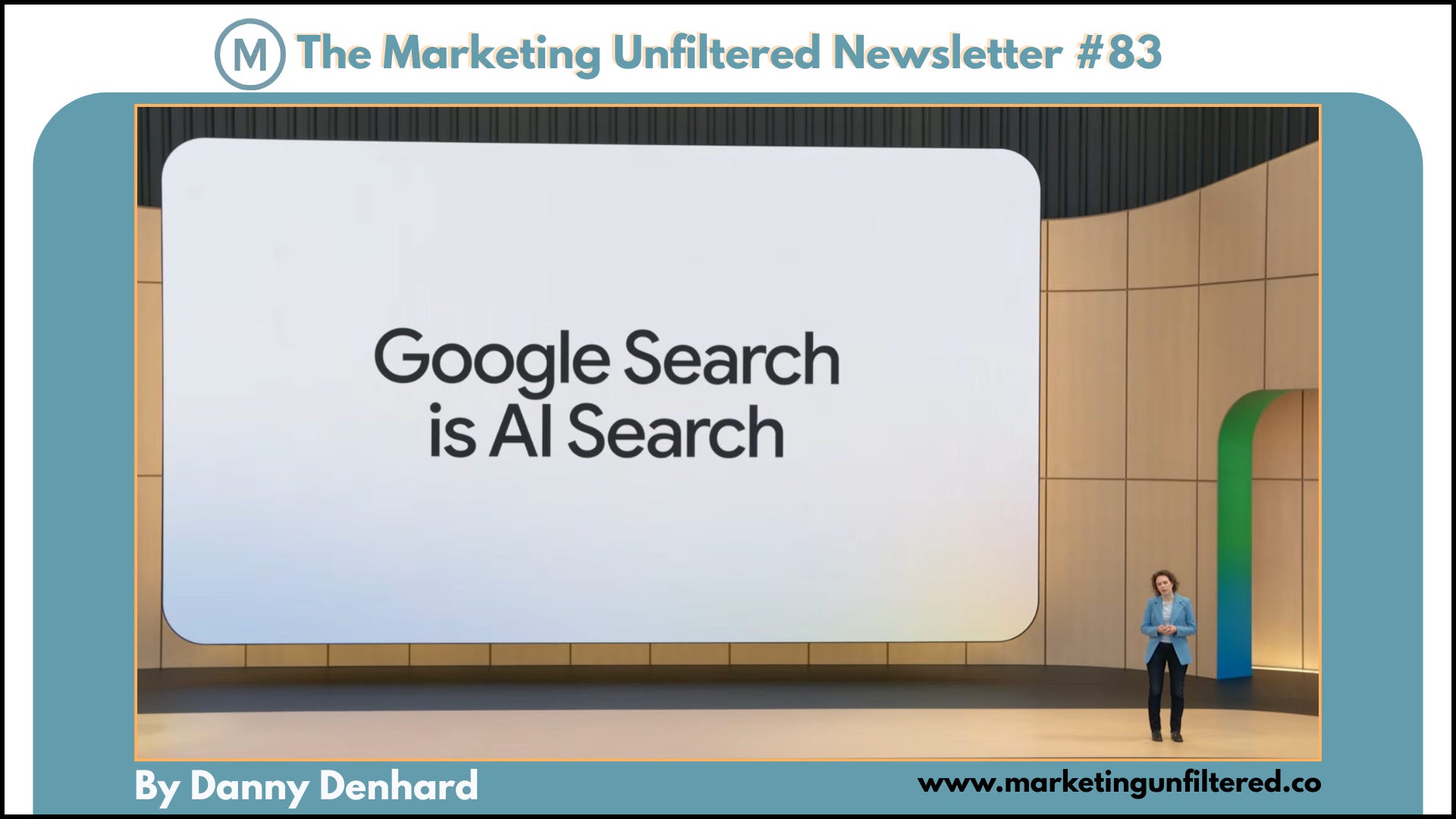
Last week Google openly hinted to a new future. Google IO was Google’s official AI company outing, it was showing off how well they could leverage their properties to place Gemini throughout every surface, every touch point and every interaction it can.
In the press tour shortly afterwards, Sundar Pichai was asked a smart question: Is the classic blue links going away?
“I think it’s important to bring users along the journey as well as making sure the product is working for their expectations [...].
People are responding positively, we can see it in the long-term metrics of the product [...]
We didn’t have AI mode a year ago, but now a lot of people are experiencing it. I think we’ve made it more seamless [...] so it’s a continuum, but I don’t think sources and links will always be there as part of it.”
— Sundar Pichai
Entering The Agentic Future: Following up from this quote, Pichai suggests Google ‘are looking to do more for the user’, hinting a move towards agentic commerce, while at the IO they pushed Google Spark (their new agent similar to openclaw) and there are subtle hints at the two worlds combining.
» Here’s a quick video run down on the event.
Google’s Big Bet For Alphabet
Google’s play is a familiar one from the large tech giants, be the utility, help more & control more to become the agentic partner of choice.
Whether that’s the current gatekeeper of the internet to the newest startups, they are all battling it out to take you from chat to completed cart as quickly and seamlessly as possible.
Google’s history and future is an essential lesson to learn for marketing and business leaders, their latest evolution is:
Search Engine → Advertising Engine → AI Engine
AI engines have
search (human led and hybrid agentic),
discovery (find, review and highlight to consumers) and
completed commerce.
Often blurring these lines to reduce friction.
It’s been a slow deliberate change and one we marketing and business have seen coming. It’s time now to act accordingly.
Iteration Beats Innovation At Large Companies
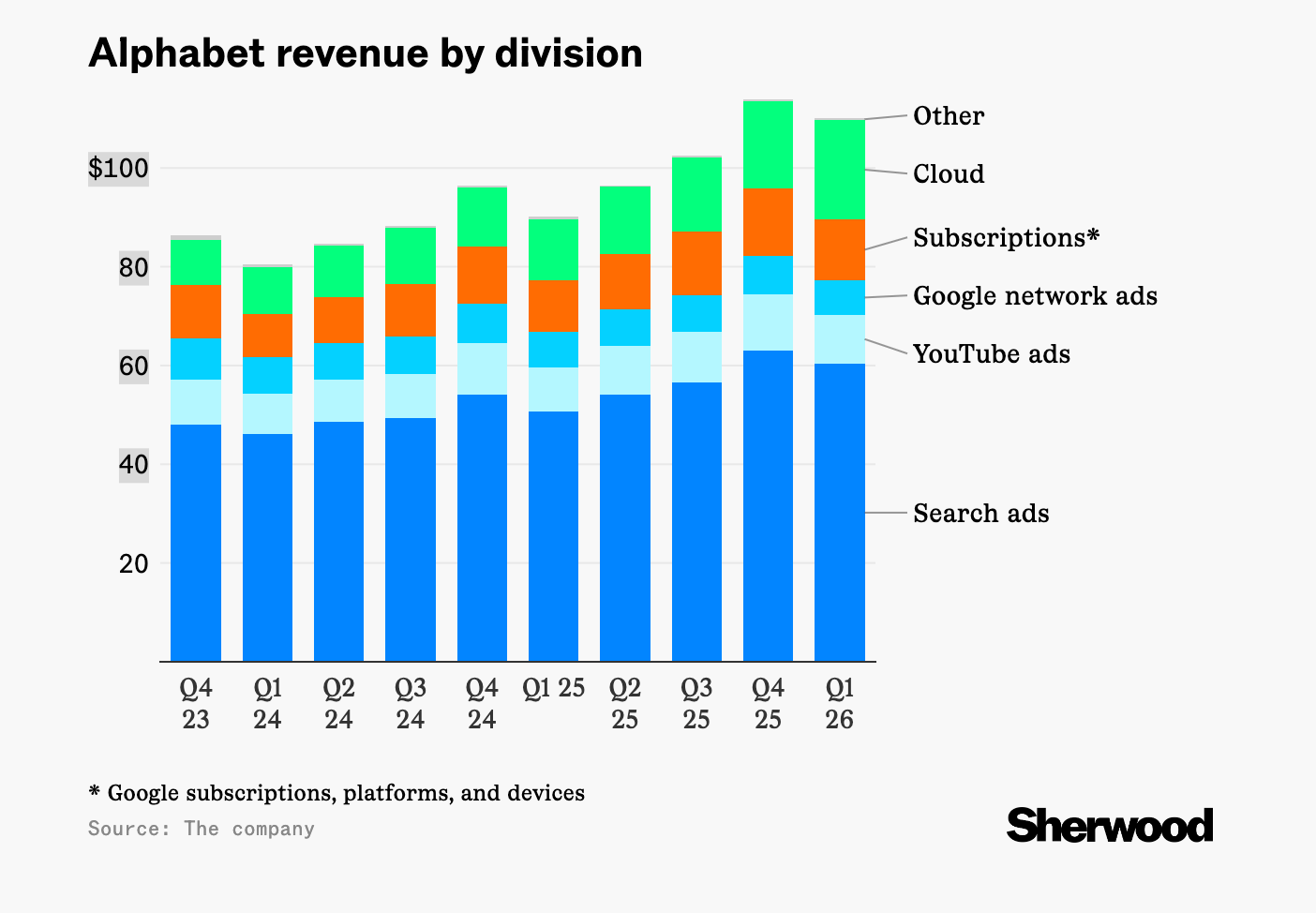
Google is an iteration company, it doesn’t have to innovate, it can and does take a step back, uses data and user intent to see signal through a lot of noise and rolls out iterative changes, slowly but surely shifting user behaviour and shifting CMO budgets.
Google’s iterative approach over the last 3 years has been critical, they could have gone all in with Gemini, they could have added Gemini and AI overviews much earlier and rightly didn’t.
A few factors we have to call out:
There has been a tsunami of AI content ever since, (some slop some not), they have had to understand the quality, then the value quantity of content and then balance updates.
Making this bigger strategic bet has taken huge confident and executive debate, forecasting & reforecasting and high trust that they evolve Google search into AI search and not just another answer engine.
Bigger Paying Picture?
As the LLM race has become, it is a race to converting free into paying subscribers. Could subscriptions and agent commerce revenue replace their reliance on advertising? Or will it be a pay to play in Google’s latest ecosystem? Google’s free search to agent (via Gemini spark) completion is something they are subtly teasing.
My bet is we will be paying for more placement, for more surfaces, touchpoints and less data…
Google’s biggest threat in this era might well be themselves…but that is for another MU newsletter ;-)
A huge thank you to Beth, Carl, Kevin, Simon and of course Harry for adding their expertise on our supporting AI Search Guide.
Have a great end to your week and we will land in your inbox again next week.
Danny
PS: If you missed recent posts, enjoy Harry’s take on how to learn from modern day political marketing and my take on how to recover your brand identity.
The featured guest contributor edtions of the MU newsletter are often my favourites, and this one has 4 of them!
I see it as: the concentrating of traffic. Brands cited in AI Overviews are getting 120% more clicks per impression than non-cited ones. So the "free traffic is dead" framing misses the idea that Google is not sending less traffic, just deciding who get's it.