


Good morning leaders. You made it through to Q4!
A big thank you for your feedback and kind words on Harry and me hitting MU 100.
I took on some of the feedback and collated the 10 tactics to stop at the bottom of this week’s newsletter so you can move forward with the great recommendations.
This week I share two coaching exercises, one of which has become a beloved game that will help you with the brand investment problem everyone is battling right now.
By Danny Denhard - Coaching marketing leaders, consulting with marketplaces and challenger brands and advising business & marketing leaders.
The Simple Brand Game
Almost every company has a brand investment problem.
This year I have heard many versions of the following:
My c-suite/leadership team doesn’t understand the power of brand
I can’t seem to land brand investment to my CEO/my boss/board
I’m constantly fighting my COO/CRO/CFO about brand spend, ROI…
They are only interested in performance ads - I fight weekly for brand spend
One of my favourite ways of helping marketing departments is running workshops and CMOs in coaching sessions and diving into problem solving mode, one of the most enjoyable ways to help them to address the brand investment problem.
Go Higher For Impact!
One of the activities I run is a brand game I created, it is designed to have a lot of discussion:
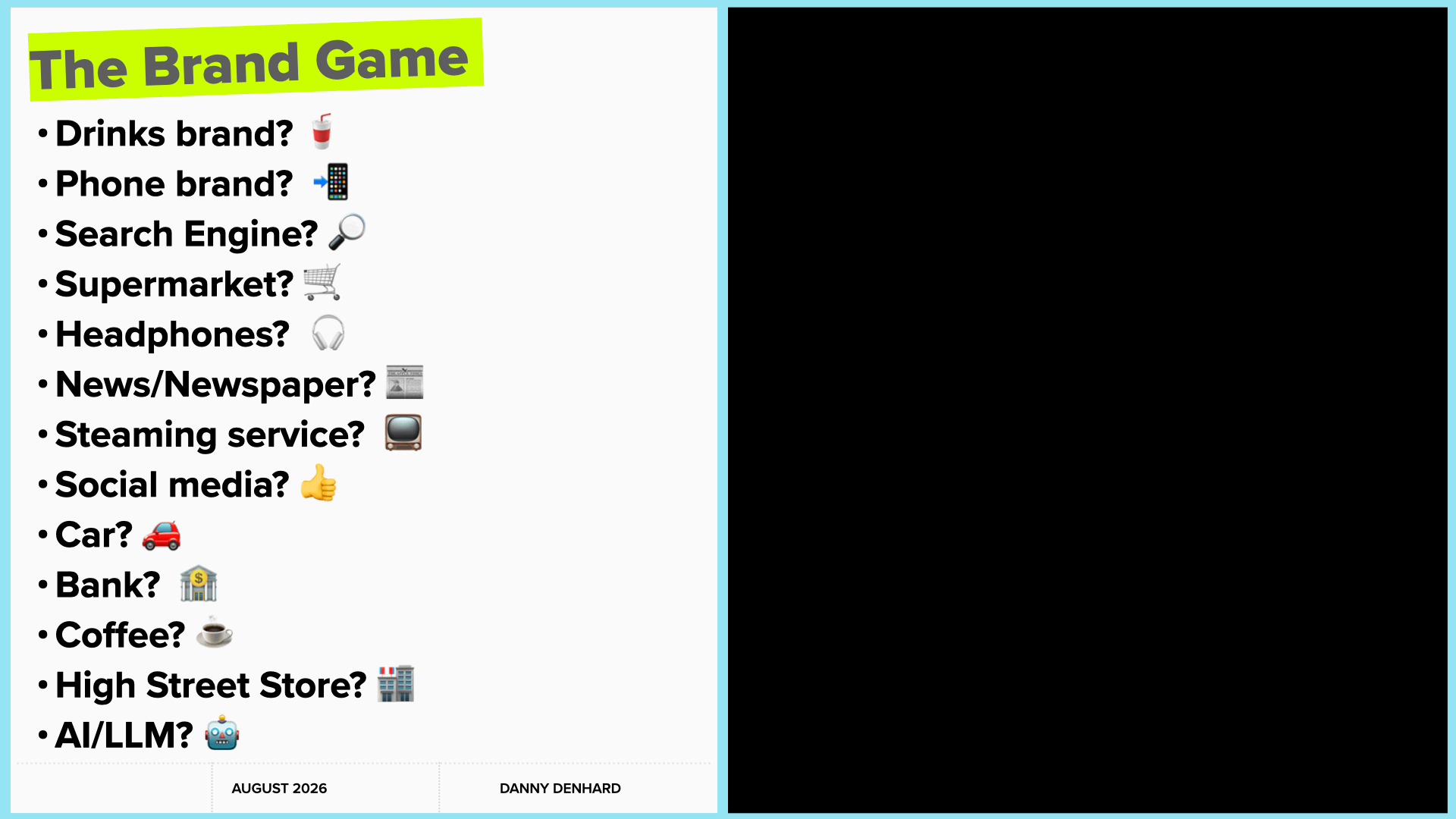
Here is a UK/US version of one of the exercises we run through:
Drinks? / Soda?
Phone? / Cell?
Search Engine?
Supermarket?
Headphones?
News/Newspaper?
Steaming service?
Social media?
Car?
Bank?
Coffee?
High Street Store? / Mall Brands?
AI/LLM?
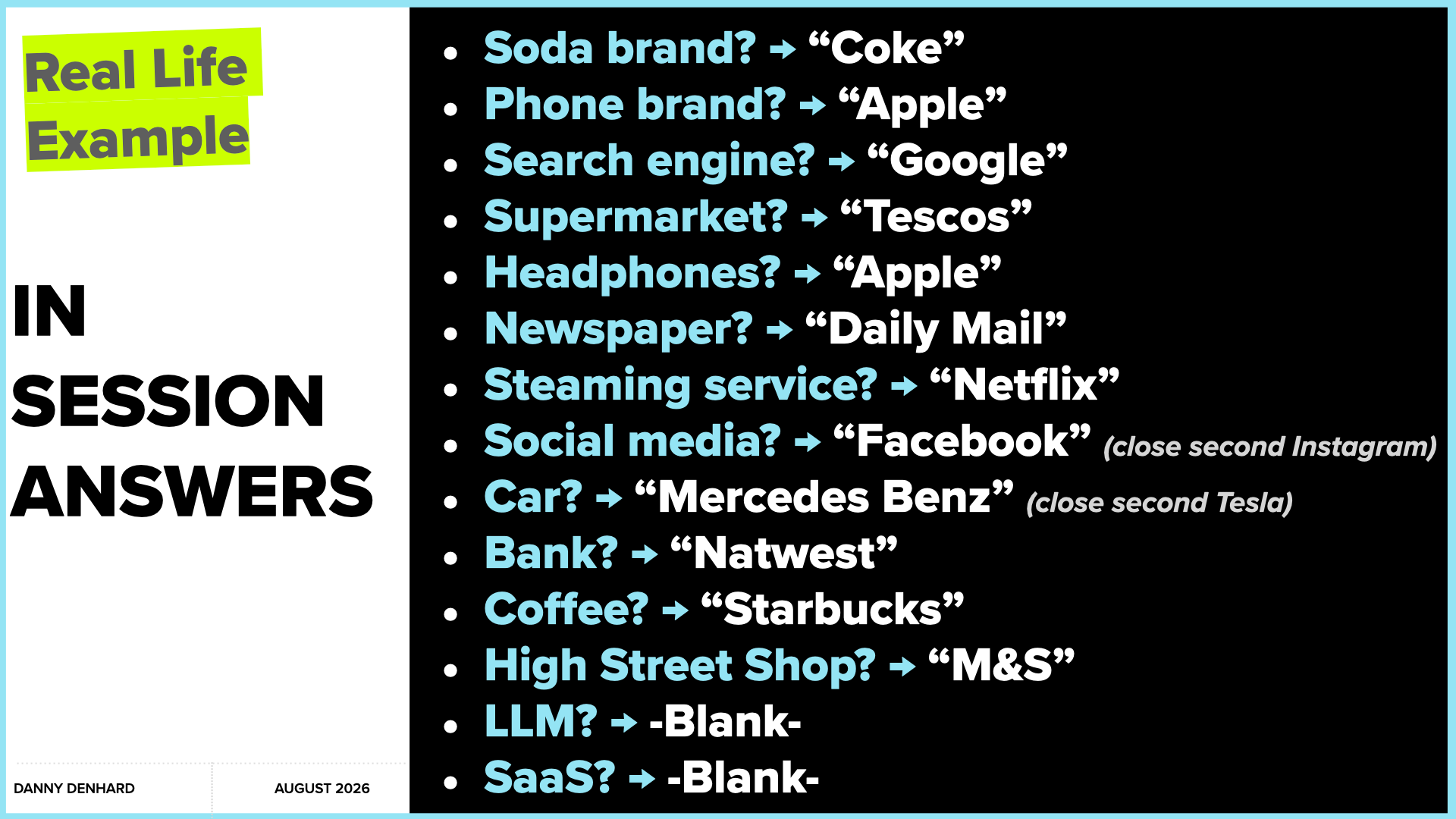
One of the most interesting takeaways from the first session is how many are often aligned.
The formula is usually:
Large brand + Global influence + large advertising + frequency of use
= Brand game winners
Large well known brands
Brands that are global (in the US it does lean more towards American specific or in some cases coast specific with food and drink brands)
They have been used in the last few days
They advertise a lot, many are in the top 10 brands who advertise
Proximity to the office (Coffee)
Use within their job (Copilot vs ChatGPT vs Claude)
The younger the C-Suite the more startups are included
Explore More
When I push for smaller, lesser known brands, this is where local and personal preference comes through in answers and discussion.
These are important to explore and break down. In a room full of peers you will often not hear personal thoughts and insights but with marketing and brand you will hear unfiltered versions of their brands and why they are important or best known.
If I ever ask for examples of ads they will be able to reference a tagline, a sound or jingle or have a nostalgic moment about the brand.
Many people remember TV ads, they remember their first bank account or their first iPhone.
Oddly, many won’t be able to tell you ad copy in performance based ads. This can be a key for you to bring up and demonstrate. Performance of course has real impact in what we do, however, in 95% of these examples discussed brands are seen, felt and used from more than a paid advert.
There are always 2 to 3 through lines:
Many say a big brand and actually dislike them. Starbucks is often the coffee brand that is called out but they dislike their coffee product.
Apple is often referred to in tech products, frequently said to be “the best” (including their headphones) and when pushed because it is aspirational (Android is often made fun of especially by non-technical leaders) not technically the best.
This is important - without telling you how to suck eggs many do not think about how these brands position their product in the good, better, best model and how they’ll leverage this.Mercedes has come up in every single session. Tesla is often referenced when a group in the c-suite drives them.
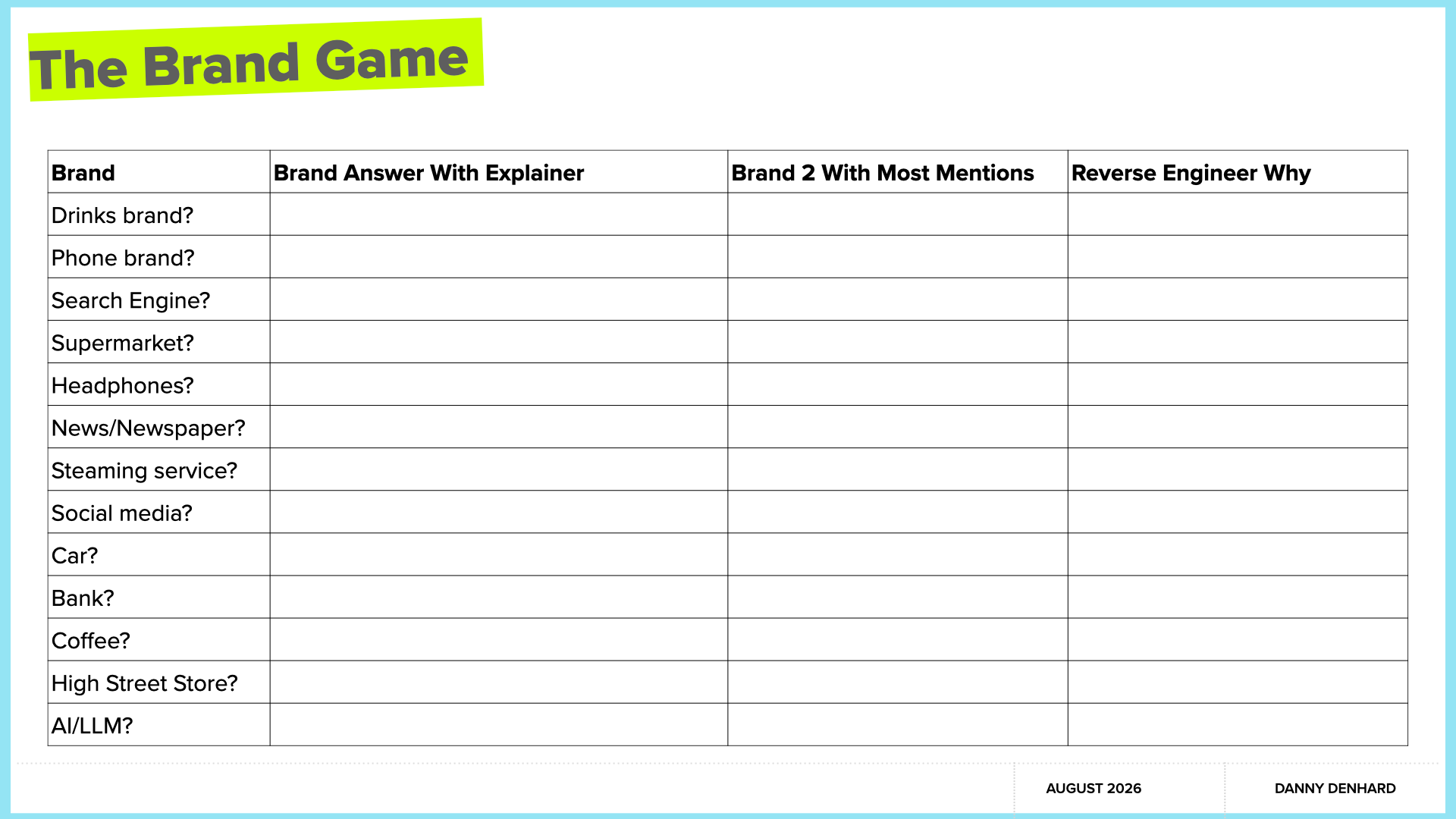
There is a load more we explore including colour, brand age, if these brands are a touch to trust brand, understanding the competitive landscape, where they sit vs competition on the my axis of unknown, known, like, disliked, trusted, hated and loved but this shortened down exercise will propel you forward.
Reverse Engineer A Well Known Brand Or Well-Respected Campaign
I will then ask the leadership team and CMOs to go the step further and reserve engineer the brands they called out.
Why? I want them to break down the tangible and intangibles. I want them to feel the brand, I want them to see the foundational layer of the work and decide what was critical.
Hint: to engage the operational leaders (COO, CRO, CFO etc), map these to OKRs and goals and suggest they map from the ground up, not top down (reverse the way they think to see how you have to fit all the tactics and activities into the annual plan you all created).
In 1:2:1 coaching, I will often push marketing leaders to reverse engineer a brand that has recently bubbled to the surface or to reverse engineer a well respected campaign.
Here are a few recent examples that have come up in conversation you could reverse engineer:
The Rhode Phone Case & The Meta x Kylie Glasses
Splitting The G (Guinness) - I might well share my version in coming weeks
On Running, Hoka & Asics - the increased influence in running and wear as a lifestyle trainer/sneaker
ChatGPT or Claude - the first mover vs incumbent is often a good choice to create and run through together
Ninja Creami - Shark and Ninja have thrived through TikTok videos and shop
The rise and importantly the fall of Labubu (this is a good supporting resource by TikTok)
And yes SaaS and so called boring B2B can be included in this.
GO & SHARE YOUR WORK! Some use slides, others Miro, if you prefer pen & paper use it, if you have a whiteboard go use it, but the key is to share your reverse engineering with others. I use a blend of Apple’s freeform and then transform into docs/decks depending on the audience.
Read My Previous Takes On Marketing Reverse Engineered
Why Reverse Engineering?
Reverse engineering is an exercise that forces you to think, go into the weeds and understand what were the decisions made, the true drivers and how much luck was at play.
I like to push on:
The 4c’s: Consumer, Cost, Convenience, Communication and repackage or compare against the 4p’s: Product, Price, Place, Promotion
Distribution, Amplification, Operations - this is critically important to package up and break down, especially if you would want to run a follow up session with your department (I always recommend this is an important case)
Timelines - timelines are essential to show you how long (or short in some cases) the process was. The large brands have brand cache and status
The Hard Calls Over Digital
The digital side is a lot easier to go through, open ad libraries, reviewing emails, ease of purchases, social listening etc, the important leadership side is why were calls made, why the pricing, why the distribution and how much impact did culture, social or search have.
Hint: This can lead to some really interesting conversations with your team leads and team members.
It’s About The Decisions, Not Being Right Or Wrong
This isn’t about what was exactly right or what was exactly the cause for success, it is the process of understanding what was critical, what the internal decisions were, if it was the product that drove success or a combination of product and marketing and an essential part we often overlook in reporting - how much luck was involved.
Following on from these sessions, I always receive feedback on WhatsApp/email about how much they enjoyed it and the level of engagement from the team it triggered.
In a world where we have to constantly re-forecast, being pressured to reduce headcount and a pressure on constant output, this is a great opportunity to step back and give yourself and/or your department a refresher.
For 2-3 hours this exercise will help to reshape how you, your team and executive peers think.
Run It Yourself? If you feel like you are not in the position to run such a workshop or session in your ELT/SLT or XCO meetings, I will happily help to facilitate and unlock/force the lightbulb moment with your colleagues. Just get in touch by hitting reply or email coach@dannydenhard.com
I recommend this as a quarterly activity for your marketing team, I’d highly recommend 1x session with your leadership team and a reverse engineering session with your CPO, these sessions become invaluable especially if you have competitors whose brand is always raised and referenced.
Good luck and if you have any you’d like to run through let me know.
PS: Here are 3 marketing examples I hand selected for you can borrow from this week:
The 10 Marketing Tactics To Stop Using But Why Some People Will Still Cling To Them
1. MQLs/SQLs as the north star
Stop: Treating MQL/SQL volume as proof that marketing is working.
Why people defend it: Simple, comparable, board‑friendly numbers that “show progress” quarter to quarter.
2. Performative marketing & content cadences
Stop: Posting on LinkedIn/Blog/TikTok just to “keep the cadence” and hit weekly volume targets.
Why people defend it: Feels like consistency, keeps brand “visible”, and is easy to brief, track and outsource.
3. AI content factories
Stop: Churning endless mediocre blog posts and ads to rank for vague TOFU keywords.
Why people defend it: It is cheap, scalable and can produce surface‑level SEO gains that look good on a dashboard.
4. Trend‑chasing brands
Stop: Jumping on every meme, political moment and TikTok format just to feel current.
Why people defend it: Occasional viral hits, short spikes in engagement, and FOMO: they fear looking out of touch.
5. Context‑free dashboards & quant‑only decisions
Stop: Reporting pretty charts with no story, no customer reality, and no qualitative insight.
Why people defend it: Numbers feel objective, safe, and “serious”; they make stakeholders feel in control.
6. Inflated titles, big‑logo CV hires, and “guru/rockstar/ninja” personas
Stop: Using job titles, past employers or personal branding to stand in for real capability.
Why people defend it: Signalling, these labels impress boards, investors, clients and sometimes teams, at least on paper.
7. Broken org design and fuzzy ownership
Stop: Structures that confuse who owns what, spawn constant re‑orgs, and ship your org chart instead of your strategy.
Why people defend it: Re‑orgs and fancy structures look like decisive leadership and satisfy internal politics in the short term.
8. “X is dead” takes
Stop: Declaring channels, tactics or roles “dead” for clicks and hot takes.
Why people defend it: It is a fast way to sound provocative, get engagement, and position themselves as ahead of the curve.
9. Conference Tourism
Stop: Treating conferences as paid holidays with deals “already done” and sessions ignored.
Why people defend it: Relationship maintenance, status, and a rare break from day‑to‑day grind disguised as “business development”.
10. Dehumanising & lazy customer thinking (users, NPS worship, contempt from the top)
Stop: Calling people “users”, spamming across channels at once, gaming NPS and quietly resenting customers.
Why people defend it: Old habits, simple metrics, and a belief that efficiency > empathy.
Thanks for reading again this week.
❤️ Sharing’s Caring ❤️
If you believe this would help your c-suite or department please share by copying and pasting https://www.marketingunfiltered.co/p/101 into slack, teams or email
Or hit the share button ⬇️
Danny & Harry